Lake Baikal is the largest freshwater lake in the world with an average depth of 744.4 m and contains roughly 20 percent of the world’s surface fresh water. The body of water is also known as the “Baikal Sea” and the "Pearl of Siberia" as it curves for nearly 400miles through South Eastern Siberia. Lake Baikal is the deepest lake in the world, clearest lake in the world and oldest lake in the world, at more than 25million years old. Baikal is home to more than 1,700 species of plants and animals, two thirds of which can be found nowhere else in the world. The lake was declared a UNESCO World Heritage Site in 1996. It is also home to the Buryat people who follow the Tibetan Buddhist religion and reside on the eastern side of the lake rearing goat, camel, cattle and sheep.
When the Trans-Siberian railway was built south of the lake 200 bridges and 33 tunnels had to be constructed. The railway is the most popular way of arriving at Lake Baikal, by either stopping at Irkutsk or Ulan-Ude which are a couple of hours from the lake.
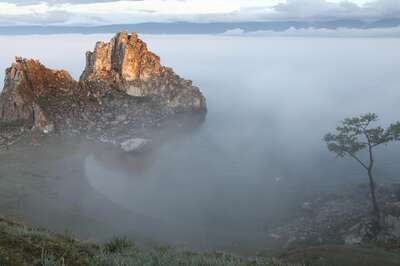
The cape is located on the northern part of Olkhon Island near the widest part of the lake (79.8 km). On the cape there is a special site (a small platform) that was used for carrying out the tailagan - gatherings of shamans. From the cape, visitors can often see Baikal nerpas - fresh-water seals, the lake's only aquatic mammals.
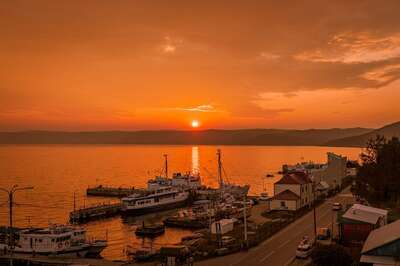
Listvyanka is a small settlement located on the shore of Lake Baikal. On the way from Irkutsk to Listvyanka there are 3 places of interest. The first is the obo - a sacred place for the local Buryat people. The second is Taltsy - an open air Museum of Russian Wooden Architecture. The third is the famous Shaman Rock (another sacred site) located on the headwaters of the Angara river. Listvyanka is also home to the Church of Saint Nicolas the Wonderworker - the guardian angel of travelers, and the Baikal Ecology Museum with exhibits of the unique fauna and flora that surround the lake. There is also an aquarium which contains different species of local fish and the Baikal nerpa - the earth's only fresh water seal.
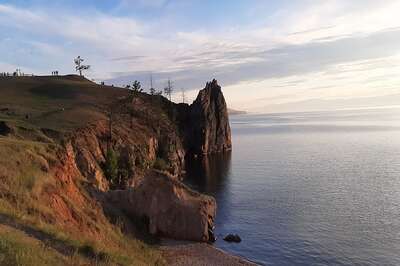
Olkhon, the largest island on Lake Baikal, stretches more than one hundred kilometers and divides the lake into 2 parts. The island’s comparatively small territory is a combination of taiga, steppe and even a small desert. Its flora and fauna are unusual. Olkhon has been home to many tribes and peoples of Siberia and Central Asia: the bellicose Huns, Turkis, Kurykans and more. One of the legends connected with the island states that the "Conqueror of the Universe" is buried on the island (Genghis Khan, the great Mongol conqueror of the early 13th century).
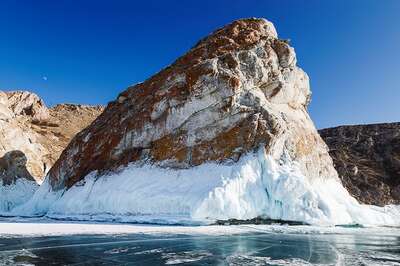
The Sagan-Zaba Cliff contains ancient rock paintings dating back to the 3rd century BC. The rock drawings are the most complex among drawings found across the huge expanse from the Ural Mountains to the shores of the Pacific Ocean.
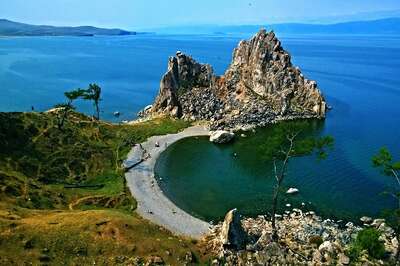
A sacred astral center for the local Buddhists and Shamanists. This is the Holy of Holies for Buryats, generally regarded as one of the 9 sanctuaries of Asia, once called the Altar of Rock, which is believed to be a residence of the major deity of shamanism worshippers - Khan Khute-baabay who is said to have descended from heaven to the earth to rule human destinies.

Ust Orda is a Buryat settlement located 62 km away from Irkutsk, in a picturesque valley of the Kuda River. The settlement is famous for being a center of traditional Buryat culture. Local lore museum possesses a rich collection of Buryat artefacts from prehistoric times until nowadays. There is an open-air exposition 'Buryat Peasant Farmstead of late XIX - early XX centuries'




Join us on Facebook
We invite you to become a fan of our company on Facebook and read Russian news and travel stories. To become a fan, click here.
Join our own Russian Travel, Culture and Literature Club on Facebook. The club was created to be a place for everyone with an interest in Russia to get to know each other and share experiences, stories, pictures and advice. To join our club, please follow this link.